


Celebrating the 20th Anniversary of the August Wilson Society
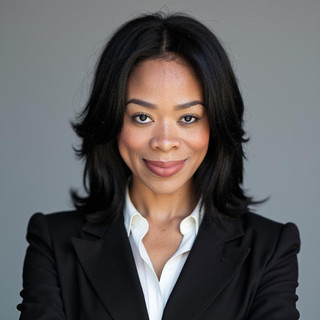

Dr. Sandra Shannon leads a pre-show discussion of August Wilson’s 1911 play Joe Turner’ Come and Gone at Baltimore, Maryland’s Chesapeake Shakespeare Company (CSC). The production is part of the Baltimore August Wilson Celebration project to bring Wilson’s work to theatres throughout Baltimore. The August Wilson Society has partnered with CSC for this citywide undertaking.

August Wilson Society Board members and friends gather at Baltimore, Maryland’s Chesapeake Shakespeare Theater Company to participate in a pre-show discussion of Wilson’s 1911 play, Joe Turner’s Come and Gone. Pictured from left to right are Dr. Khalid Long, August Wilson Society President and dramaturg for the August Wilson Celebration; Vincent Parham; Abdul Ali, Kristen Shannon; Timea Webster; Dr. Sandra Shannon, Michael Dinwiddie; and Dr. Isaiah Wooden.

Pittsburgh Mayor Ed Gainey awarded the August Wilson Society a city proclamation at its 2023 Biennial Colloquium. This honor was bestowed during an evening reception held at the local Rivers Club. Pictured from left to right are Pittsburgh Mayor Ed Gainey, August Wilson Society President Emerita, Dr. Sandra Shannon, and August Wilson Society former President, the late Michael Dinwiddie.

In 2016 the August Wilson Society celebrated its 10th Anniversary at Howard University with a Who’s Who List of Wilsonian celebrities. Pictured here are acclaimed actor DelRoy Lindo, Wilson’s oldest daughter, Sakina Ansari Wilson, and August Wilson Society President Dr. Sandra Shannon.
Sandra Shannon, Ph.D., Professor
Emerita, Department of English, Howard
University, Continues Research and
Scholarship on Playwright August Wilson
Sandra Shannon, Ph.D., Professor Emerita, Department of English; Howard University, continues to be honored for herdecades-long research and scholarship on Pulitzer Prize winning playwright August Wilson. In the spring 2006, while still at Howard, she brought together a group of 12 Howard University
faculty members and scholars to formally establish the nationally renowned August Wilson Society, whose ongoing mission is to commemorate the work of the poet-turned-playwright and cultural activist by assuring continued studying, teaching, performing, researching, and the ultimate safeguarding of the rich legacy bequeathed to us in the form of 10 plays that chronicle the stories
of African Americans from 1904 to 1997. She served as President of
the Society for 15 years.
Since founding AWS and well after her retirement from Howard University in 2017, Dr. Shannon has remained committed to this organization’s core principles. Her departure from Howard did not dampen her enthusiasm nor did her change in status after 34 years of service lessen her involvement in multiple intellectual
activities ranging from speaking engagements, leadership roles in national organizations, publishing and teaching opportunities, and, most recently, recognition from the U.S. State Department as a Fulbright Specialist, which makes her eligible to be matched with projects designed by foreign institutions in over 150 countries globally.
Dr. Shannon has earned the reputation as a respected voice in American drama and leading August Wilson scholar. As such, she continues to be honored for her work on a national level. In 2022, she received the Career Achievement Award in Academic Theatre from the Association for Theatre in Higher Education (ATHE). This
award “honors individuals who are known for remarkable scholarly and creative contributions to the field, whose work has passed the test of time with its original thinking, and whose service has proven significant in shaping the field and future of theatre and performance. Awardees are authentic role models to colleagues
and students, nurture the careers of others, and are effective champions of diversity and equity in theatre and education.”
Dr. Shannon recently expounded on her scholarship and honors, as well as the August Wilson Society’s 20th Year anniversary.
Who was August Wilson?
August Wilson (born Frederick August Kittel, Jr.) was a celebrated
American playwright often called the "theater's poet of Black
America". He is best known for the American Century Cycle, a
series of ten plays—from Gem of the Ocean (1904) to Radio Golf
(1997)—set in each decade of the 20th century that chronicle the
African American experience. “Put them all together,” Wilson once
said, “and you have a history.” In May 2004, August Wilson
received the Honorary Doctor of Humanities degree during Howard
University’s 136 th Commencement Exercises.
What sparked your interest in the playwright?
My interest in August Wilson was sparked by a remarkable
confluence of both personal loss and academic advancements that
I experienced around the mid to late 1980s. Within that time frame,
I evolved from a minimally paid Graduate Teaching Assistant in
English at the University of Maryland at College Park (1981-85) to a
proud PhD recipient (1986). With degree in hand, I went on to
become Assistant Professor of English at Howard University (1987),
which came with a full salary, benefits, and a pathway to potential
job security through tenure. Unfortunately, in 1987, I also lost my
father to cancer. As if by design, that same year, I picked up and
read a copy of August Wilson’s play Fences, whose main character
mirrored my daddy’s tough love, warrior spirit, responsibility, and
resilience in the face of southern Virginia’s lingering Jim Crow laws.
As I write in the Preface to The Dramatic Vision of August Wilson
(Howard University Press, 1995), my seminal study on the Pulitzer
Prize winning playwright, “I felt this man had somehow peeped into
my own past to reinvigorate a part of my life that had for years lain
dormant in my memory. Troy Maxson was my father–crude,
domineering, hardworking, hard-loving, and fiercely proud of his
ability to provide for his family.”
How would you describe Wilson’s relevance in today’s society?
August Wilson remains deeply relevant to today's society
because of the prescient nature of his American Century Cycle—ten
plays chronicling the African American experience across each
decade of the 20th century. In each play. Wilson privileges rather
than suppresses the history of Africans in America. As he depicts
them, they are the masters of their fate and the subjects of their
own actions. In recasting that history, whether on the stage or the
page, Wilson compels us to examine systemic and enduring issues
around the fight for dignity and an even playing field. While the
American Century Cycle plays are set in past decades, several key
themes resound with today’s audiences:
● Wilson’s works spotlight structural poverty, urban
displacement, employment discrimination, and the legacy
of institutional racism that mirror ongoing socioeconomic
disparities.
● Rather than viewing Black life strictly through the lens of
trauma, Wilson elevates Black folklore, blues traditions,
family bonds, and everyday resilience as powerful tools of
spiritual and cultural survival.
● His plays address timeless conflicts around generational
trauma, father-son friction, and the weight of history.
● His storytelling invites diverse audiences to sit in the same
room, share an emotional experience, and recognize
common humanity despite our cultural differences.
August Wilson’s enduring relevance continues to manifest in
multiple high-profile acts of recognition. For example, in 2021, he
was honored with a postal stamp bearing his image as part of
USPS’s Black Heritage series. In 2025, his name was added to the
iconic Hollywood Walk of Fame. Wilson’s estate has entered a
partnership with the streaming giant Netflix and Denzell
Washington to film and air all ten of his American Century Cycle
plays. To date, Fences, The Piano Lesson, and Ma Rainey’s Black
Bottom have made it to the big screen. Joe Turner’s Come and
Gone is waiting in the wings.
Wilson’s plays continue to reach and impact a whole new
generation through popular programs such as August Wilson New
Voices (formerly known as the August Wilson Monologue
Competition), a national performance and educational program for
high school students honoring Wilson’s work. High school students
explore and perform monologues from Wilson’s landmark 10-play
American Century Cycle. In addition, Wilson’s name lends
gravitas to several fellowships that target young theater
practitioners. For example, I am the proud Co-Founder of the
College of Fellows August Wilson Fellowship for Students of Color
in Technical Theatre, Production, and Design
Which of his plays do you recommend for today’s students?
Based upon my years of experience teaching Wilson’s plays to
college-age young adults, I recommend the following because they
strike chords of familiarity and usually inspire a high level of
engagement among these students.
Joe Turner’s Come and Gone
Fences
Jitney
King Hedley, II
Ma Rainey’s Black Bottom
The Piano Lesson
Questions about generational tension, cultural capital and gender
roles, for example, bubble to the surface in each of the above plays
and often lead to fully engaged class discussions.
What can we learn from his work?
August Wilson’s 10-play Century Cycle highlights the often
ignored or subordinated roles that African Americans played in the
making of American history. Also brought to the fore are issues of
double consciousness and the fight for agency and dignity through
the lens of Black life in the 20th century. Wilson’s plays show how
the past—from the legacy of slavery to the Great Migration and
systemic racism—shapes modern families, choices, and
opportunities. Rooted in the blues tradition and African American
oral history, his dialogue turns everyday speech into a rich cultural
archive. Wilson’s work and life demonstrate how to maintain
personal honor and artistic integrity when confronting prejudice.
What are his most important works?
This question is relative, but here is my answer:
1) Wilson’s one-man-show, How I Learned What I Learned
2) The ten collected plays in the American Century Cycle
3) The individual plays in the American Century Cycle
What are your recent honors?
In August 2026, I received formal notice from the U.S.
Department of Educational and Cultural Affairs (ECA) and World
Learning that I have been placed on the Fulbright Specialist Roster
for a tenure of three years. This status makes me eligible to be
matched with projects designed by foreign institutions in over 150
countries globally. As I wrote in my application, “I hold that too
many unexplored though important aspects of America’s story
emerge in select works by black female playwrights Alice Childress,
Lynn Nottage, Ntozake Shange and Lorraine Hansberry and black
male playwrights William Wells Brown, Langston Hughes, Charles
Fuller, Douglass Turner Ward, Amiri Baraka and August Wilson. I
propose unearthing that story through “community lectures,
cultural events, public presentations, or outreach activities to local
schools or other relevant organizations.”
What else would you like to highlight?
The August Wilson Society (www.augustwilsonsociety.org)
is currently celebrating the 20 th Anniversary of its founding.
Activities include partnering with the University of Pittsburgh for a
landmark 2027 Biennial Colloquium
https://www.augustwilsonsociety.org/aws-events, profiling the
organization’s 12 original Founders, and mounting an aggressive
online and in-person fundraising campaign to support its
continued mission of preserving the theatrical, literary, noble
legacy that August Wilson has bequeathed us in the American
Century Cycle and in his other impactful writings.
As its founder and President Emerita, I am deeply proud of
what we have built together. Our anniversary invites us to celebrate
the people who made this work possible and recognize the
Society’s growing impact.


Comments