


Issue 1
HOME | Archives | Issue 1
Award Abstract #1923229
Exploring the Success of HBCUs in Development of Blacks Earning Engineering and Computing Graduate Degrees
Historically black colleges and universities (HBCUs) have played a critical role in the production of African American and Black students in science, technology, engineering and mathematics (STEM). For graduate degrees, between 2002 and 2011, the National Science Foundation found that HBCUs comprised all ten of the top baccalaureate-origin institutions for Blacks who went on to obtain a doctorate degree in science and engineering. The predominance of HBCUs in the preparation of Black students for graduate programs suggests a need to better understand this under-explored success case and, in particular, the practices of these institutions that support prospective Black students as they explore and apply to graduate school. Identifying and disseminating these success cases will encourage HBCU and non-HBCU leaders to add resources towards matriculating more undergraduate students in STEM including increasing the number that go on to pursue masters and PhDs in engineering and computing. In addition, this study will provide an opportunity for non-HBCU organizations to better understand HBCUs, their culture and how they can be more strategic in partnering with them as well as recruiting and retaining engineering and computing HBCU students at the graduate level. Through the resulting evidence-based insights and recommendations, this project will contribute to the goals outlined by the National Academies: (1) increasing underrepresented minority students’ interest in graduate STEM degrees, (2) retaining and graduating Black students in those programs, and (3) documenting best practices for others to use.
Using a three-phased study, the research team will (1) examine the pathways and experiences of HBCU engineering and computing undergraduates who are interested in graduate school and (2) isolate the individual, institutional and cultural factors that contribute to their overall undergraduate experiences and lead to successful completion of engineering and computing graduate programs. Phase I will seek breadth by collecting survey data from current students and recent alumni associated with engineering and computing programs at HBCUs. Phase II will serve to develop rich insights from three particular HBCUs through in-depth, interview-based case studies. The three institutions will be selected through purposive sampling using maximum variation techniques of the Phase I results. Phase III will involve sharing the integrated results from Phases I and II with HBCU students and stakeholders during two validation workshops at the 2021 National Society of Black Engineers National Convention and at the 2021 Annual American Society for Engineering Education Annual Conference. The integrated results of these three phases will add to the research community’s understanding of the experiences of Black students at HBCUs including the contribution of administrators, faculty and staff towards their students’ interest, eventual pursuit and completion of engineering and computing graduate degrees. In addition, empirically-informed dissemination workshops will engage and equip stakeholders from HBCUs and other institutions to examine their own practices and adopt approaches that can increase underrepresented minority students’ interest and preparedness for graduate programs.
This award reflects NSF’s statutory mission and has been deemed worthy of support through evaluation using the Foundation’s intellectual merit and broader impacts review criteria. Please report errors in award information by writing to: awardsearch@nsf.gov.
Investigator(s): Trina Fletcher
trfletch@fiu.edu (Principal Investigator)
Alexandra Strong (Co-Principal Investigator)
Sponsor: Florida International University
11200 SW 8TH ST
Miami, FL 33199-0001
(305) 348-2494
$361,507.00
Exploring the Success of HBCUs in Development of Blacks Earning Engineering and Computing Graduate Degrees
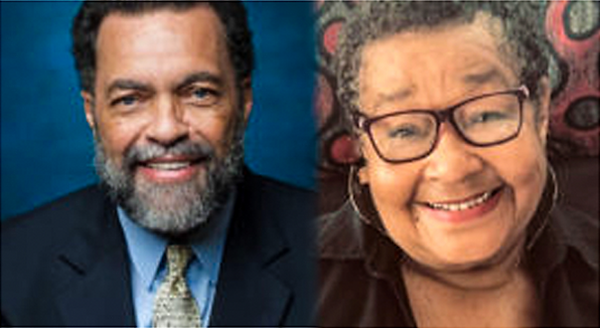
-By Damani and Ife Keene

William ‘Damani’ and Carol ‘Ife’ Keene, a husband/wife team who are researcher/authors,have written a historical novel about Damani’s enslaved ancestor, Mariah Otey Redick, and her family, during the U.S. Civil War period. Reportedly, Mariah was a spy for the Union Army. The story is told from the perspective of the enslaved and set in their Quarters, uniquely different from most historical fictions of the era. Both Damani and Ife are alumni of Howard University.
The authors provide highlights from their book, their research challenges and emotionally charged discoveries in the interview below-

Anita Nahal’s Hey … Spilt milk is spilt, Nothing else & Life on the Go from New Delhi to America
-By Gwendolyn Scotton Bethea
Anita Nahal’s recently published books, Hey … spilt milk is spilt, nothing else (poems), and Life on the Go from New Delhi to America (flash fictions) are a pure delight, giving a genuine glimpse into Nahal’s soul. I am honored to be a witness to her deepest thoughts that reveal sometimes perceptible, and at other times more abstract, but beautifully woven meanings and nuances in these two works. While one can peer into Nahal’s personal story, one can also see her world view of challenges, trials, joys and triumphs that are universal in depth and relevance. A native of New Delhi, India, Nahal’s poetry and flash fiction (the newest genre for short fictional narratives), merge Indian and American culture and history. There is unexpected thankfulness for personal heartache that learns to ride the waves of passion, regeneration, aging, and world issues. For example,in “Age,” she mourns the passage of time, yet triumphs in the wisdom that only comes on wings that soar onward and upward despite winds of change and challenge. There is much to be gleaned from her work in their carefully threaded passages that are both timeless and retrospective. In the poem, “Dyeing and Undying,” she writes that she is tired of coloring her grey strands, likely a metaphor for faking happiness when a deep, soul cleansing cry, lies just beneath the surface. Or consider her profound ache for immigrant babies and her own unheeded longing for acceptance devoid of superficial, external promises in the poem, “They say people need to unite?” She writes of conversations about skin color, beauty and worthiness and delves into the still existing cross-continental phenomenon in her poem, “Darkie,” stating, “I did not know that I was a dirty child and then a dirty woman.” And then, in the poem “Cacophony,” she asks, “Tell me then just why do you flirt with tanning yourself?” The poem, “Hope,” is a nod towards historical prescience, as she quotes Dr. Martin Luther King, Jr. in his commonly known, “Mountaintop” speech, reminding us of King’s words of magnificence: “I’ve seen the promised land.” And one truly comes to believe, after reading her works, that one will see one’s own promised land, if life and time permit. Indeed, the imagery is palpable in many poems, including the one in which she first holds the small hand of her only child, a precious son, and then his matured hand ever so imperceptibly.
In the flash fictions book, Life on the Go…,Nahal, through the voice of the protagonist Priya, touches upon myriad themes of immigrants moving between countries, observing both excitement and pitfalls that universally plague humankind. For example, in the piece, “Homelessness can happen to anyone,” Priya is horrified to see a former classmate trudging the streets, after her own return to her native India from an exciting, yet also trying, eight years in America. In another flash fiction, “Blessed Caesarian,” Priya meticulously and delicately recounts the birth of her son, with her mother gently caressing and calming her newly experienced motherly emotions, as she eagerly anticipates nursing her newborn son. And in some of the stories, Priya reminisces about her parents wisely acknowledging that all humans err, and that learning and growing has a natural cyclical pattern regardless of age or relationship.
Anita Nahal’s poems and flash fictions are valuable contributions to the literature on immigration and diaspora writings. Nahal has an unusual ability to take a metaphor like “spilt milk” and settle our souls into a calm acceptance of the inevitabilities of our lives. Yet, she encourages and challenges us to create and believe in new opportunities for life, love, and laughter. Nahal’s third collection of poetry and second collection of flash fictions, as well as her first novella, will be published soon.
Dr. Gwendolyn Scotton Bethea is the founder of Scotton Communications Network, an organization that specializes in editing, writing, and public relations.
Anita’s books may be purchased by contacting her at anitnah@gmail.com

The Genius of Ernest Everett Just
Reprinted from Howard University Graduate School Research Magazine, December 2013, Issue 2, December 2013
Dr. Malcolm Byrnes is an associate professor in the Department of Biochemistry and Molecular Biology in the College of Medicine, Howard University.
“Just has qualities of genius; nothing whatever turns him aside from his purpose.” Frank R. Lillie, Just’s mentor at Woods Hole, in a 1939 letter to National Research Council President Ross Harrison (Lillie quoted in Manning, K. (1983) Black Apollo of Science. New York: Oxford University Press, p. 319).
Ernest Everett Just (1883-1941) was a pioneering African-American embryologist who is best known for his discovery of the fast block to polyspermy, his elucidation of the slow block, and his discovery that the adhesive properties of the cells of the cleavage embryo depend on the particular developmental stage that they are in. Born in Charleston in 1883, Just left South Carolina as a teenager to attend Kimball Union Academy, a boarding school in Meriden, New Hampshire, and then Dartmouth College in nearby Hanover, where he received a bachelor’s degree in 1907. That same year, he accepted a faculty position at Howard University. His appointment was at first in English, but in 1910, at the request of President Thirkfield, he moved to the Biology Department. Just quickly rose through the academic ranks, becoming both Professor of Biology in the College of Arts and Sciences and Professor of Physiology in the College of Medicine in 1912. With funding from the Rosenwald Fund, he established a graduate program in Zoology at Howard, and served as the Department of Zoology’s first chair. In 1916, he received a Ph.D. in Zoology from the University of Chicago.
Soon after his arrival at Howard, Just began to look for opportunities to do scientific research. Through the help of William Patten, a Dartmouth professor with whom he had done independent research as an undergraduate student, Just was able secure a position as an apprentice under embryologist Frank R. Lillie, who was both the director of the Marine Biological Laboratory (MBL) at Woods Hole, Mass., and the Chair of the Department of Zoology at the University of Chicago. Over the course of the next twenty or so years, Just would spend the better part of each summer at Woods Hole.
While at Woods Hole, Just rose from student apprentice to international expert. His particular area of expertise was in the fertilization and early development of marine invertebrates such as the sea urchin, the sand dollar, and various species of marine annelid. Through careful study of the animals in their natural settings, and by applying the knowledge he had acquired to the laboratory setting, he was able to gain unique insight into the inner workings of the animals’ developmental processes.
He devised a set of “indices of normal development,” based mainly on the way in which a surface structure of the egg, known as the fertilization envelope, changed during fertilization, that allowed him to predict with precision whether or not a particular egg would develop normally. So extensive was his knowledge, and so great was his skill at being able to coax embryos to develop, that many scientists at Woods Hole and beyond sought his advice.
But Just was not content to remain only a technical expert on the handling of marine animal eggs and embryos. He had greater aspirations. In 1929, after almost two decades of summers at Woods Hole, he made his first trip abroad. It was to the marine biological station, the Stazione Zoologica, in Naples. The next year, he received a prestigious invitation to spend six months at the Kaiser Wilhelm Institut für Biologie in Berlin-Dahlem. It turns out that the Germans had seen parallels between Just’s work on the egg cell surface and their own experiments on the freshwater unicellular protozoan Amoeba proteus. Additional research trips followed; there were maybe ten in all. His last was to a rustic marine station in a small fishing village, Roscoff, on the Brittany coast of France, in 1938. Throughout this period, Just remained a professor at Howard, although at times his relationship with university officials was rocky because, whereas they wanted him to focus more on teaching medical students, he was mainly interested in pursuing his research.
The trips to Naples and Berlin-Dahlem turned out to be watershed events in the life of Just. After these trips, his work took on a philosophical tenor, and he began to speak and write more forcefully on what he believed was scientifically correct, in opposition to others’ beliefs. He clashed with giants of biology such as Jacques Loeb, a prominent physiologist, and Thomas Hunt Morgan, the geneticist and future Nobel laureate who had proposed the gene theory.
Just showed that the model of experimental parthenogenesis (the artificial activation of an egg in the absence of sperm) that Loeb had developed—and for which Loeb had received extensive media attention—was flawed. He argued that Loeb’s focus, which was on the agent that “causes” parthenogenetic activation, was all wrong, and that, instead, the focus should be on the egg itself and what Just called the egg’s “independent irritability,” or its ability to respond to diverse stimuli.
Likewise, Just did not agree with Morgan, who believed that genes controlled practically everything: from inheritance to developmental processes to all of the events of the cell. In opposition to Morgan, Just presented his own explanation for how the cells of the embryo differentiate into different types. Calling it his “theory of genetic restriction,” he proposed that cytoplasmic factors, not genes in the nucleus, play the more important role during development. Rather than having a position of dominance, nuclei merely act to sequester this or that set of cytoplasmic factors, thereby releasing others to determine in which direction the cell will go.
Thus, according to Just’s theory, there is a kind of selective genetic restriction of potencies in the cells. In stressing the important role of the cytoplasm, Just effectively knocked the gene from its throne in the nucleus. He argued that there was more of an egalitarian relationship between nucleus and cytoplasm, and that there existed a kind of “federalism of the cell” (to use a term coined by Scott Gilbert of Swarthmore College). Interestingly, recent discoveries in genomics are showing that Just was on to something: we are seeing, from the results of the Encyclopedia of DNA Elements (ENCODE) project, that there is a broad highway of interaction between nucleus and cytoplasm, and that extranuclear determinants are very much a part of the equation.
From the discussion above, we can see that E. E. Just made important contributions to biology. We can also see that some of his ideas about intracellular dynamics were especially prescient. As time goes by and more of Just’s work is uncovered and discussed, this latter point may become even more apparent. Yet, despite Just’s scientific brilliance, despite his intelligence and hard work, there is one aspect of his character in particular that stands out: his unyielding perseverance in the face of almost overwhelming odds. In the midst of the racist attitudes of colleagues, some of whom sought to discredit his work and deny funding for his research, Just persevered. Head unbowed, he strove to uncover the mysteries of nature until the end of his life (he died of pancreatic cancer in 1941).
It is this aspect of his character, I believe, that gives Just the “qualities of genius” to which Lillie refers above. This kind of perseverance, marked as it is by a passionate and undying search for truth, is what sets the genius apart from others. Whenever we see it, we should recognize it for what it is. And so we celebrate and honor Just. At the same time, we remember what Just endured and, drawing strength from his example, are encouraged to press on in our own endeavors. When challenges mount and struggles intensify, we can say “If Just could do it, maybe I can, too.”
~ end ~
For Additional Reading:
Byrnes WM, Eckberg WR (2006) Ernest Everett Just (1883-1941)—An Early Ecological Developmental Biologist. Developmental Biology 296, 1-11. Last accessed November 27, 2013.
Byrnes WM (2007) Just, Ernest Everett (1883-1941). In: Koertge N, Ed., The New Dictionary of Scientific Biography.
Farmington Hills , MI: Charles Scribner’s Sons/Gale Norton, 48-52. Last accessed November 27, 2013.
Byrnes WM (2009) Ernest Everett Just, Johannes Holtfreter, and the Origin of Certain Concepts in Embryo Morphogenesis. Molecular Reproduction and Development 76, 912-921. Last accessed November 27, 2013.
Byrnes WM (2010) Ernest Everett Just: Experimental Biologist Par Excellence. ASBMB Today (February issue): 22-25.
Last accessed November 27, 2013.
Byrnes WM (2013) Walking in the Footsteps of Ernest Everett Just at the Stazione Zoologica in Naples: Celebration of a Friendship. Howard University NewsRoom website (June 11, 2013).
Byrnes WM (2013) Opinion: A Diverse Perspective: Progress in Science is Dependent on the Diversity of Its Workforce.
The Scientist (July 29, 2013). Last accessed November 27, 2013.
Gilbert SF (1988) Cellular Politics: Ernest Everett Just, Richard B. Goldschmidt, and the Attempt to Reconcile
Choosing to Impact the Legislative Process in America
-By Marilyn Johnson
We are engaging in one of the most arduous political campaigns in the history of the United States. We recently watched while Democrats, vying for our confidence and votes, crossed the nation to distinguish themselves. Yet it meant little because the country is in turmoil and its citizens are enduring the world’s biggest threat – COVID-19. In fact, most citizens don’t have the time or energy to give the campaign nor the candidates the attention they merit. Yet this election will be the most important of our lifetime. We are learning that we are as grossly unprepared for health pandemics as we are for climatic events like the tornadoes, hurricanes, fires and floods which become more prevalent each year. We are afraid. The question that looms large in my mind is what are we are we going to do to change it?|
Most of the nation is only waking up to the harsh reality of the enduring disparity in the standard of living among its economic and racial groups. The pandemic, like Hurricane Katrina, illustrates the impact poverty and/or race can have on one’s ability to safely negotiate crises. The President has been forced to acknowledge the disparity because the data is uncompromising and clear. Institutions like Johns Hopkins Bloomberg School of Public Health are among those leading the charge to document racial data transparency. The Bloomberg School, in particular, deems it important to shed light on the intersecting forces of racial disparities, underlying conditions, and poverty that affect how the virus spreads throughout the U.S.[1]
It is a fact that traditionally underserved populations are less likely to recover from the virus. More importantly, many are more likely to be exposed because of where they live, how they live, where they work and the positions they hold in the workplace. Again, the question that looms large in my mind is what are we going to do to change it? How can a world under siege use this dilemma to reset? And why is it necessary? It is necessary because every year billions of dollars are allocated to address the standard of living in America. The fabric of American life is based on the United States Declaration of Independence’s premise of our “unalienable right to life, liberty and the pursuit of happiness”.
How is it possible that those most in need are living on the very fringes of society? And, what will become of them as people from middle and upper income families are forced to join them as a consequence of Covid-19?
It is not an accident that we are also in the middle of our 2020 Census count which determines the basis for distributing more than $675 billion in federal funds annually to communities across the country to support vital programs—impacting housing, education, transportation, employment, health care and public policy.[2] We must use our experts on impacting the legislative process to educate and motivate people in communities most vulnerable to crises to take action this year like no other.
Johns Hopkins University of Medicine, Coronavirus Resources Center, State COVID-19 Data by Race, 4/30/2020
What is the decennial census? 2020 United States Census Frequently Asked Questions, Census 2020 Website